
Debt After Death
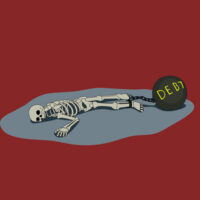
You may pass away with debts that have yet to be paid. Even though you have passed on, these debts may still need to be taken care of.
Going over the basic facts that underlie paying debts after your death, and speaking with a Florida estate planning lawyer at the Millhorn Elder Law Planning Group will help you develop the best possible estate plan.
What Happens To Your Debt After You Pass Away?
The answer to this question is as follows: it depends on your estate plan. There is no exact, universal answer to this question, since every person’s estate plan is a little different.
Even though the above is true, there are certain things that can, and probably will, happen. And, one of these is as follows: the assets within your estate will be used to pay off your debt.
Just as an example, if you have a lot of cash and this cash is a part of your estate plan, the court can use this cash to pay off the debts you own. This means that your beneficiaries may receive less than you intend to give them.
The above can happen and, depending on how your estate is developed, is likely to happen. But, you can protect your estate with the right tool, allowing your debt to be extinguished and your beneficiaries to receive their assets.
How Can You Protect Your Estate From Debt Collection?
Many of the assets that comprise your estate can be used to pay off the debts you owe. This is because these assets are owned by the estate, which means that you used to own them.
To protect these assets from debt collection, you must take these assets out of your estate. And, you must do so, in a way that also allows your beneficiaries to receive them.
Out of all the tools you can use to accomplish the above the best is, in most cases, a good trust. A good trust can protect your assets from creditors, while letting your beneficiaries receive their assets almost immediately.
When you pass away, your assets will go straight to your beneficiaries. They won’t have to pass through probate, which will save them time, around nine months, if not more, as well as a lot of money.
On top of that, if you have any debts, the people who are owed these debts will have a much more difficult time obtaining these assets. This is because you won’t own these assets, making it more difficult for creditors to get them.
The best way to develop a trust is to work with a lawyer. Your lawyer will go over the different types of trust you can develop and, in turn, which type of trust is best for you. In most cases, this will be an irrevocable trust.
Speak With A Florida Estate Planning Lawyer Today
If you need help developing an estate plan, you must work with someone who can help. Speak with a Florida estate planning lawyer today and we will help you develop the estate plan you need.
Sources:
law.cornell.edu/wex/probate
law.cornell.edu/wex/irrevocable_trust